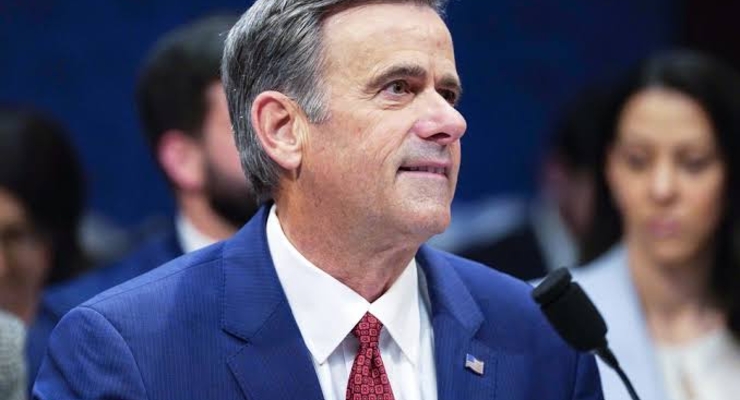
CIA Director John Ratcliffe made an unannounced visit to Moscow on August 25 - a fact confirmed by U.S. officials to this outlet, although the details of his meetings and even the names of those he met with remain undisclosed.
This was reported by Radio Free Europe/Radio Liberty, citing Dengi.ua.
Why Ratcliffe’s Trip Came as a Surprise
This is Ratcliffe’s first publicly known trip to Russia since he took the helm of the CIA under Donald Trump’s administration. News of the visit emerged not from an official announcement but through flight-tracking services: a Boeing C-17 military transport aircraft flew over Latvia and landed at Moscow’s Vnukovo Airport. The CIA and the White House have not immediately provided any comments.
Why Experts View the Visit as a Sign of “High Stakes”
Russia strategist Glen Howard explained: “CIA directors don’t board a C-17 and fly halfway around the world to Russia unless the matter is important.” He drew a historical parallel - in November 2021, then-CIA Director William Burns also traveled to Moscow to warn the Russians against invading Ukraine, a few months before the full-scale war.
What They Might Have Discussed Regarding Ukraine
One explanation for the trip is an attempt to determine whether it’s still possible to persuade Moscow to come to the negotiating table, despite the fact that U.S. mediation efforts have stalled even after the Trump-Putin summit in Alaska. Analyst Bradley Bowman hopes that Ratcliffe delivered a direct demand to Putin to cease hostilities, backed by a warning of increasingly severe consequences for Russia.
Why Iran Might Be the Focus
Bowman also suggests that the talks might have focused on Russia’s assistance to Iran - specifically, target intelligence and support in the field of drones. Howard called this possible scenario “a kind of ultimatum” - an attempt to force Moscow to stop supplying weapons to Tehran, especially since the U.S. had announced a new sanctions strategy against Iran the day before.
Could American Prisoners be Part of the Negotiations?
Another likely topic is the fate of U.S. citizens detained in Russia. The CIA has already played a key role in previous prisoner exchanges, and Ratcliffe himself personally participated in negotiations for the release of Ksenia Karelina.
What Might Ultimately Come of This Trip?
The main question remains open: Is this an escalation, a diplomatic gesture, or an attempt to reach a specific agreement through an intelligence channel? It is telling that Trump’s envoys, Kushner and Witkoff, did not travel to Kyiv this time - Howard sees this as a sign that the White House still hopes for progress specifically in negotiations with Moscow.