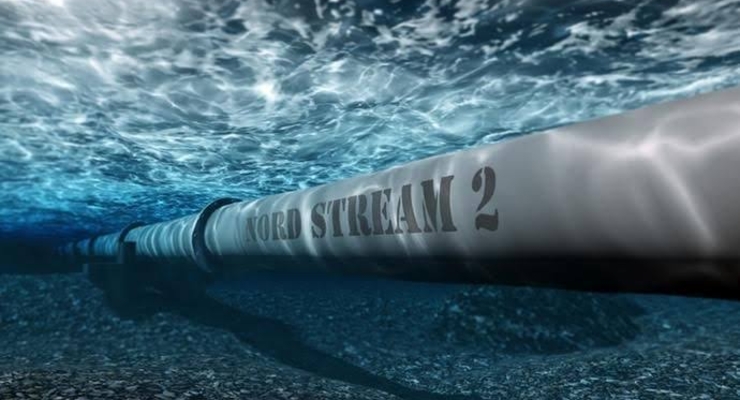
High-ranking officials from the U.S. and Russia held closed-door consultations regarding the possible involvement of an American investor in restoring the operation of the Nord Stream gas pipelines to sell Russian fuel to Europe after the war ends.
According to Dengi.ua, citingReuters.
Who Is Leading the Negotiations and What Is the Commercial Interest?
Participating in the dialogue are U.S. Special Envoy and Donald Trump’s son-in-law Jared Kushner and Vladimir Putin’s close adviser Kirill Dmitriev, who have held meetings in Moscow and New York in recent weeks.
According to the agency’s sources, the economic initiative includes the following conditions:
- Kushner’s approach: the U.S. negotiator views the launch of joint business projects as a key lever for fostering a truce, which should ensure that U.S. investors profit from energy supplies to Europe;
- the White House’s official position: a representative of the administration noted that any agreements must be coordinated through the DFC and the U.S. Department of the Treasury, with a guarantee of direct financial benefits for American businesses and taxpayers;
- Lukoil’s assets: the parties are also discussing the sale of Lukoil’s network of European refineries and gas stations to a consortium comprising the DFC and investors from Qatar and the UAE in exchange for the lifting of sanctions.
“Any deals must be negotiated by Russia with the DFC and the Treasury Department and must benefit U.S. taxpayers and companies,” a White House spokesperson said.
Why Germany and Eastern European Allies Are Resisting the Restart
The likelihood of the gas deal being implemented in the medium term remains extremely low due to strict sanctions barriers and categorical opposition from European capitals.
The main political and legal obstacles to the project are:
- blockade in Europe: the Nord Stream gas pipelines are subject to EU and U.S. sanctions, and the German Ministry for Economic Affairs has already stated that Berlin has found alternatives and will not grant permission for Russian gas to return;
- division in Germany: the current governing coalition opposes the restoration of the pipelines, while the pro-Russian opposition party “Alternative for Germany” (AfD) seeks to resume purchases and is planning a meeting with Dmitriev early next year;
- ownership structure: 51% of the operating company’s shares are owned by Russia’s Gazprom, 31% is held by two German entities, and the remaining shares are held by French and Dutch companies, with the German shareholders refusing to relinquish control;
- intelligence reaction: the heads of European intelligence agencies warned that the Kremlin is not seeking a quick peace, but is merely using its American contacts to push through lucrative economic contracts.