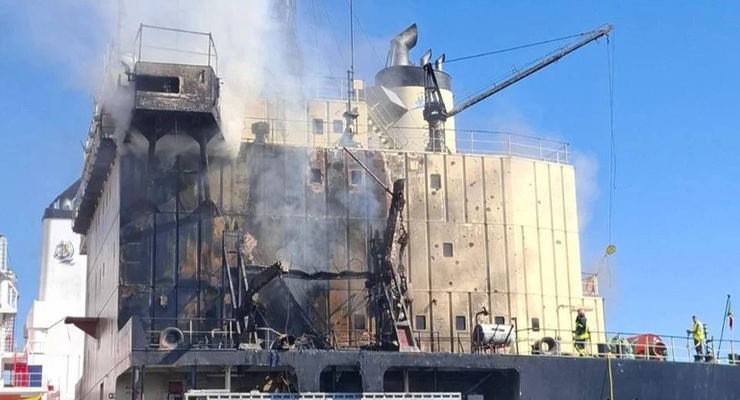
Ship arrivals at Ukraine’s Black Sea ports have been temporarily suspended amid increased threats of Russian attacks. At the same time, Ukrainian authorities emphasize that this is not a naval blockade, and the government has not imposed any restrictions on ship traffic. Minister of Agrarian Policy Taras Vysotsky told reporters about this, as reported by Dengi.ua, citing Latifundist.
According to the minister, as recently as the day before, four to five ships were calling at Ukrainian ports; however, as of July 23, incoming traffic had been suspended. Vysotsky noted that this decision was made by the shipowners themselves after assessing the security situation, while the government had not imposed any restrictions on shipping.
He emphasized that the stable operation of the Ukrainian maritime corridor remains a matter of national security. The government, he said, is already working on solutions designed to help restore stable shipping, though details of these measures have not yet been disclosed.
The minister also noted that the situation can change very quickly. When risks increase, shipowners typically first suspend operations, assess the situation, and then make further decisions. Therefore, it is currently impossible to predict how long the suspension will last.
Vysotsky believes that at this stage, it is premature to speak of a serious impact on exports. According to him, the current situation has been ongoing for only a few days, so while it is already affecting market sentiment and pricing, it has not yet had a critical impact on annual shipment volumes. Significant consequences may arise only if the restrictions remain in place for several months.
In this regard, the minister recommended that farmers who are in a position to do so should not rush to sell their grain. According to him, during periods of heightened uncertainty, the market’s initial reaction is often accompanied by a drop in prices; therefore, it makes sense for producers who are not in a rush to sell to wait a few days or weeks. At the same time, he noted that domestic consumption and exports via alternative routes continue as usual.