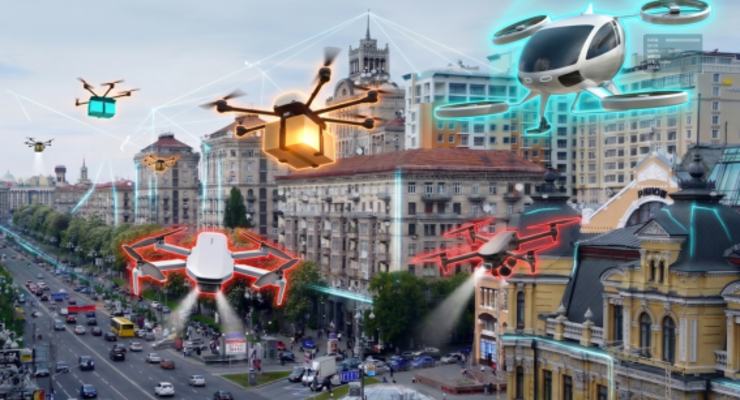
The use of drones has expanded beyond the realms of warfare, entertainment, and aerial photography. While in Ukraine, UAVs are primarily associated with war, a promising industry of the future - the low-altitude economy - is taking shape around them globally.
What Is the Low-Altitude Economy?
Analysts at the Bank of America Institute have noted that the low-altitude economy (LAE) is a new economic sector where business and service activities are concentrated in airspace at altitudes of up to 1,000 meters. In fact, this industry is defined by three main components:
- Aircraft: drones, autonomous helicopters, and electric vertical takeoff and landing (eVTOL) aircraft.
- Infrastructure: vertiports (takeoff and landing sites for air taxis and drones), charging stations, distribution hubs, and air traffic control systems.
- Services: passenger transport, cargo delivery, emergency response, agricultural operations, tourism, and surveillance.
Economic Potential and Risks
Forecasts regarding the development of LAE are largely optimistic. As noted by Morgan Stanley analysts, eVTOLs could significantly transform the transportation market and generate 12 times more revenue than ride-sharing services, as well as account for up to 35% of flights with a range of less than 320 km by 2050, which could potentially generate over $40 billion in additional revenue for airlines.
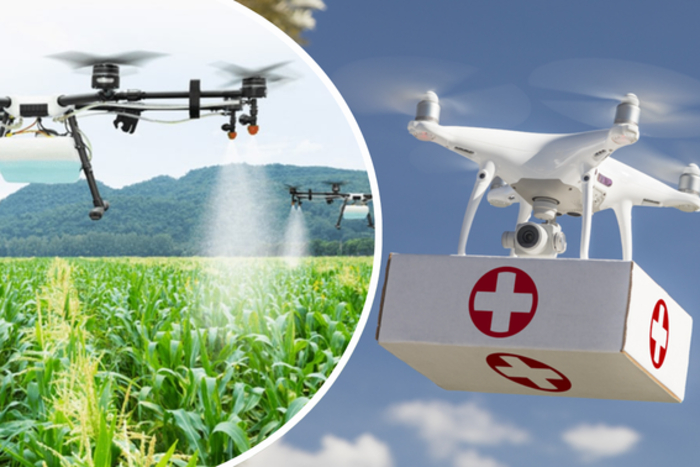
China is already demonstrating the effectiveness of these technologies: according to APCO Worldwide, drones cut delivery times in half in logistics, and in agriculture, a single UAV can treat up to 67 hectares of fields per day, significantly reducing water and pesticide use. For its part, China Daily added that drones can save lives by creating aerial “green corridors” for organ donations. Thus, according to Morgan Stanley’s base-case scenario, the global LAE market could reach $9 trillion by 2050; under the optimistic scenario, $19 trillion; and under the pessimistic scenario, $2.3 trillion.
However, under the SESAR project - the technological foundation of the Single European Sky - warnings have been issued regarding the risks of UAV collisions in the sky, environmental impacts, and privacy concerns, while the Chinese Academy of Sciences has highlighted the lack of regulation regarding airspace rights over private land. Furthermore, according to The Jamestown Foundation, the industry is currently relying on government support. Market expansion is hampered by the excessively high cost of aircraft (up to $2 million per eVTOL) and drone delivery, weak batteries, and consumers’ reluctance to adopt the technology on a mass scale.
How China Is Developing LAE
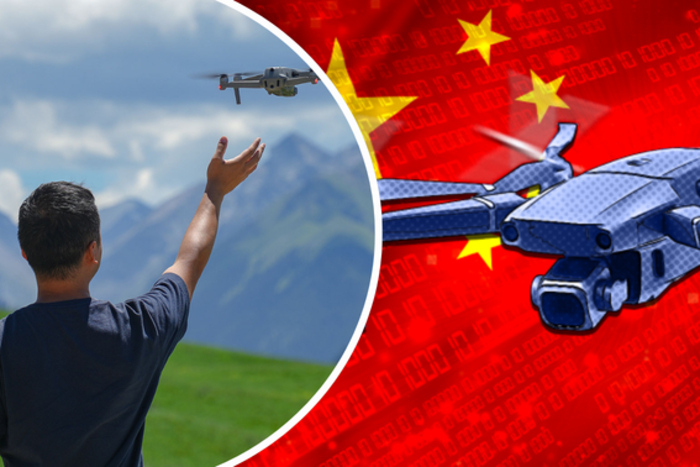
Despite the known risks, China is currently the most active in developing LAE, expecting this market to grow to 3.5 trillion yuan ($506.5 billion) by 2035. Consequently, as early as 2021, Beijing designated the development of the LAE as a national priority. As a result, the Department of Low-Altitude Economy Development was established in late 2024, while the regulatory framework began to take shape even earlier.
Thus, on January 1, 2024, special administrative regulations on UAV flights came into effect, classifying them into five categories: micro (mass up to 250 g), light (takeoff mass up to 7 kg), small (takeoff weight up to 25 kg), medium (takeoff weight up to 150 kg), and large (takeoff weight over 150 kg). A certificate of airworthiness is required for medium and large UAVs.
All UAVs are subject to registration and must have a unique identification code, and most of them (except micro-UAVs) must transmit data to the state surveillance system during flight. The document establishes rules for safe use and requirements for operators: for most operators, obtaining the appropriate certificates or licenses is required, and for commercial flights and the use of small, medium, and large UAVs, liability insurance is mandatory.
For its part, the government must improve mechanisms for airspace use and digital infrastructure. The regulations also define a list of controlled zones (airspace above 120 m, areas around airports, power plants, military facilities, state borders, etc.), where flights are permitted only with special authorization. It also provides for the creation of a national platform for drone oversight and data exchange among government agencies.
Finally, on July 1, 2026, the updated PRC Civil Aviation Law came into effect, codifying most of the provisions of the administrative regulations on UAV flights and integrating drones into the civil aviation system. The document requires regions to plan airport development, provides for government investment in aviation infrastructure and route planning, and, for the first time at the legislative level, designates the development of LAE as a priority of state policy.
Catching Up with China: LAE Development in the EU and the U.S.
The United States and the European Union are also gradually developing their own approaches to LAE development. In the EU, UAV operating rules were introduced as early as May 2019; in the U.S., the Federal Aviation Administration (FAA) is currently working on this. Unlike in China, U.S. and European regulations have simplified certain requirements for drones weighing up to 250 g. The EU has exempted operators from registration requirements, while the U.S. has eliminated the requirement to install remote identification modules.
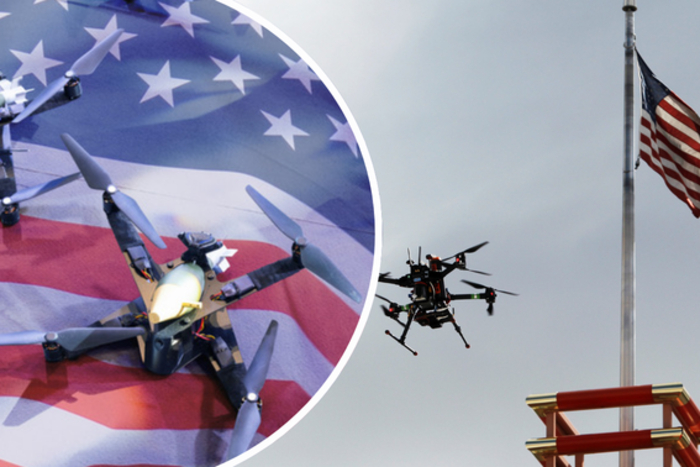
Approaches to pilot training also differ. In the EU, for the lightest and most basic drones, it is sufficient to review the manufacturer’s user manual, while for more complex models, pilots must complete online training and pass a written exam. In the U.S., the purpose of the flight plays a key role: if a drone is used for commercial purposes, a person aged 16 or older must pass an aviation exam and obtain a certificate.
In the EU and the U.S., operating a UAV without a special permit is limited to an altitude of about 120 m (as in China). Therefore, in the U.S., access to controlled airspace is maximally digitized thanks to the LAANC system, which automatically verifies data and issues flight authorizations in near real time.
At the same time, in the EU, similar authorizations are processed through the U-space system - a specially designated airspace where UAV flights are supported by digital services. This infrastructure ensures continuous network-based identification of the drone throughout its entire route. It is U-space that the EU views as the foundation for the large-scale development of LAE.
In the U.S., the development of LAE is supported by the UTM (UAS Traffic Management) ecosystem, which facilitates data exchange between operators, route planning, flight monitoring, and the prevention of airspace conflicts. Commercial operators are already using UTM capabilities for package delivery. At the same time, according to the Future Vertical AAM Report, the development of LAE at the state level is uneven: 27 states still lack their own policies in this area and rely on federal programs.
Ukraine’s Prospects in the Field of LAE
In a comment to Dengi.ua, aviation expert Bohdan Dolintse noted that Ukraine has significant potential for LAE development thanks to its well-developed ecosystem of UAV manufacturers, the largest number of qualified operators, pilots, and engineers, as well as a large agricultural sector serving as one of the key customers for the new industry’s services.
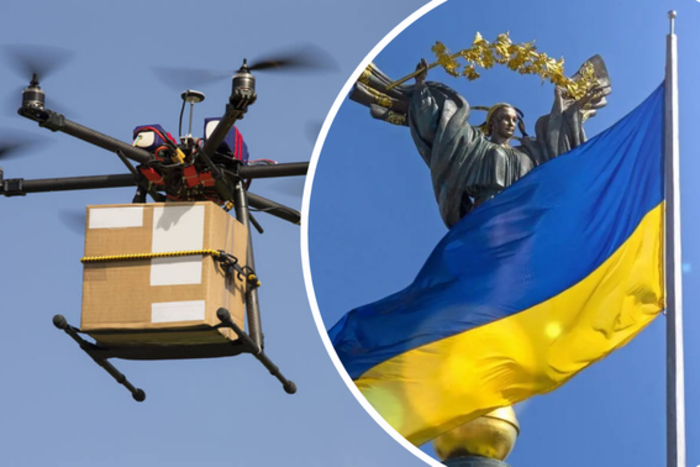
Back in 2017, the State Aviation Service of Ukraine presented a regulatory framework for civilian UAVs, proposing altitude restrictions, weight-based classification, and various requirements for registration, pilot training, and certification. The market criticized the concept due to its strict restrictions and bureaucratic nature, so the rules were not approved. A similar fate befell the Ministry of Internal Affairs’ Draft Law No.13600 on regulating and establishing liability for the use of UAVs, which failed in the Verkhovna Rada in early 2026; notably, both initiatives ignored the concept of the low-altitude economy (LAE).
According to Dolintse, many government regulatory agencies want to take control of an industry that does not yet exist because of its financial potential.
“This is a huge market that, through government regulation alone, will generate hundreds of millions or even billions of hryvnias,” the expert notes, adding that complex bureaucracy will lead to significant corruption in this sector.
Dolintse is convinced that Ukraine should adopt the EU’s existing regulatory model rather than invent its own. At the same time, the ARMADA Association of Manufacturers of Unmanned Systems and Related Technologies told Dengi.ua that the Ukrainian model should not simply copy foreign approaches due to our unique experience in the security domain, and that drafting legislation must begin today, as any delay will lead to a loss of competitive advantages.
“Legislation must be based on a clear distinction between civilian, commercial, and special-purpose UAVs, a risk-based approach to registration, digital services, integration with U-space, and the protection of personal data and technical information,” - ARMADA emphasizes, noting that relevant associations, leading manufacturers of unmanned systems, operators, and other industry representatives must be involved in the drafting process.
According to Dolintse, Ukraine still faces a number of obstacles on the path to the Single European Sky: building the necessary infrastructure (vertiports, communication networks, charging stations), defining safe flight routes, regulating the use of radio frequencies, and developing an aviation liability insurance system.
“Based on my estimates, after the war, it will likely take up to a year before we see the basic infrastructure in place, and in 2–5 years it will be completed and fully implemented,” the expert noted.
Thus, the world stands on the threshold of a new drone economy capable of transforming not only global markets but also everyday life - from delivery services to urban passenger transport, which for decades has been associated with ground-based transportation. Leading countries are already laying the regulatory and technological foundation for this industry. Ukraine, meanwhile, has a historic opportunity to turn its wartime experience into a competitive advantage in the low-altitude economy. However, if this issue continues to be ignored by the state and society, we risk once again adding to our track record a promising opportunity that has been derailed by the classic Ukrainian “not the right time.”