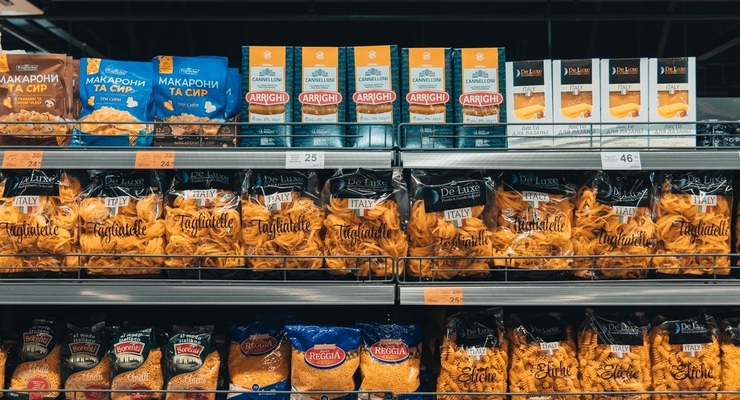
Massive Russian strikes on the distribution centers of Ukrainian retail chains have destroyed significant amounts of inventory and complicated the delivery of goods to stores. However, there is no reason to expect the closure of major retail chains or a physical shortage of food products. This was stated by Taras Vysotsky, Minister of Agrarian Policy, in comments to UNIAN, as reported by Dengi.ua.
According to the official, Ukrainian agricultural production has sufficient capacity to supply the domestic market with essential food products. Currently, the main task for trading companies is to restructure their logistics following the loss of part of their warehouse infrastructure.
How Food Delivery Will Change
Due to damage to and destruction of distribution hubs, supermarkets are forced to change their usual supply chains. Companies are switching to new routes and trying to deliver products directly to stores as much as possible.
Specifically, chains are:
- reorganizing delivery routes;
- reducing their reliance on destroyed distribution centers;
- sending goods directly to retail locations;
- reallocating available inventory among stores.
It will take time to restore the usual supply system, so shoppers may notice changes in the product selection.
Will There Be a Food Shortage?
The Ministry of Agrarian Policy and Food emphasizes that there is no risk of food completely disappearing from store shelves. Essential food items should remain available to residents of populated areas.
However, some stores may temporarily have a limited selection. Specifically, shoppers may encounter:
- a reduction in the number of brands within a single category;
- a temporary unavailability of certain items;
- delays in the delivery of certain goods;
- changes to the usual product lineup.
This situation is primarily due to the redistribution of product flows, rather than a shortage of Ukrainian-made goods.
Which Products Were Destroyed by Russian Strikes
According to Vysotsky, the affected distribution centers stored a wide variety of product categories. Therefore, it is not yet possible to identify a single specific type of goods that suffered more than others.
The warehouses contained both long-shelf-life products - such as drinking water and groceries - and perishable goods with short shelf lives.
Now, retail chains must replenish the destroyed inventory and reroute deliveries via new routes.
Thus, while Russian strikes have indeed created problems for supermarkets, Ukraine is not facing the closure of major chains such as Silpo and ATB, nor is it facing a widespread food shortage. During the period of logistics recovery, shoppers will most likely have to put up with a more limited selection of certain goods.