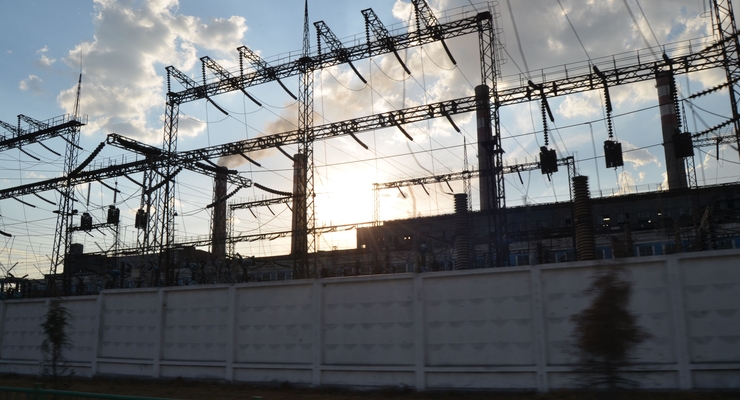
Despite an unprecedented program to protect the power grid, Russia’s new jet-powered drones and a shortage of ballistic missile interceptors could undermine the efforts of Ukrainian energy workers this winter.
This is reported by Dengi.ua, citing The Economist.
How Ukraine Is Preparing Its Power Grid for Winter
An unprecedented program to strengthen the power grid is ahead of schedule - half of the planned work has already been completed. The country is set to enter the winter with excess generating capacity, 14 billion cubic meters of gas reserves, improved physical protection of key grid nodes, and new private air defense companies to assist the depleted air force.
Even before last winter ended, the National Security and Defense Council (NSDC) decided to take action a repeat of the crisis. Since April, the government and energy companies have been implementing a resilience plan focused on four areas:
- sufficient local generating capacity for critical infrastructure in every major city;
- physical protection of key elements;
- decentralized heating;
- decentralized electricity supply.
A separate program covers backup water supply. According to energy expert Oleksandr Kharchenko, by December, three times as much work will have been completed as in any previous year. The State Agency for Recovery has already protected two dozen of Kyiv’s 110-kilovolt transformers with mesh and concrete reinforcement, and has also fortified power plants - previously, none of these facilities had any protection.
Why the Shortage of Interceptors Remains a Critical Threat
Russia has ramped up its production of ballistic missiles to about 100 per month just as Ukraine’s stockpile of interceptors has sharply declined. Kyiv is trying to secure an additional 300 Patriot missiles from its partners this winter, but there are no guarantees, and its own ballistic missile interceptor programs are unlikely to yield results in the coming years.
According to DTEK, the company that operates Kyiv’s power grid, attacks on the energy sector have set monthly records for four consecutive months. The capital’s large-scale thermal power plants are too big to be fully protected against a concentrated ballistic strike.
Why Jet-Powered Drones Have Become a New Serious Threat
Jet-powered drones - which Russia has been launching by the hundreds during recent attacks - pose a separate danger. While Ukraine has learned to shoot down conventional "kamikaze drones" in more than nine out of ten cases, the new jet-powered models fly at speeds of up to 600 km/h, compared to 200 km/h for their predecessors, and no effective - or inexpensive - countermeasure has yet been developed.
According to a source in the air defense command, during the latest attacks, available assets - fighter jets, man-portable air-defense systems (MANPADS), and automated anti-aircraft guns - shot down only 30% of the jet-powered drones. Even more alarming is that these drones were able to strike high-value targets that ballistic missiles had been unable to reach for four years.
The problem is likely to worsen: Contrary to Western predictions, Russia has found a way to produce jet engines on an industrial scale, circumventing sanctions to obtain equipment for 3D-printing turbines. The cost of a single such drone has fallen to approximately $50,000–70,000 and will continue to decline.
Which Cities Are Most Vulnerable This Winter
Russia’s main focus is likely now on the approximately 140 substations operated by the state-owned company Ukrenergo, which convert high-voltage electricity to lower voltages for local grids. Due to reduced industrial demand in Ukraine this winter, there may be an overall surplus of electricity - the bigger problem will be delivering power to vulnerable cities, particularly Kyiv, Odesa, and Kryvyi Rih, if Russia destroys their local generating capacity.
The capital is particularly vulnerable: some substations around Kyiv lack backup systems, as do the city’s connections to the nuclear power plants that provide most of its electricity. As many as 2,500 of the capital’s 15,000 buildings lack a backup heat source.