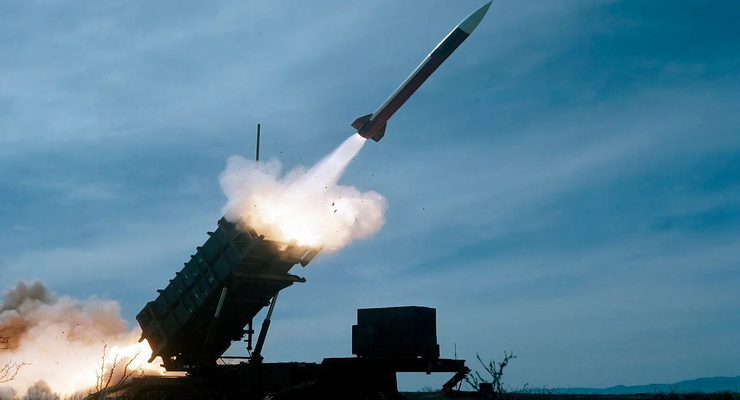
Ukraine, in collaboration with nine European countries, is preparing to conduct the first test of the promising Freyja missile defense system, attempting to intercept a ballistic target. The test is tentatively scheduled for July 2027. This was reported by Dengi.ua, citing a report by Delo.ua.
Freyja will be based on the Ukrainian FP-7.X interceptor, developed by Fire Point. As part of the project, the company intends to integrate it with European radars, guidance systems, secure communication channels, and fire control systems. Fire Point is serving as the program’s prime integrator.
The participants expect to receive the first minimally viable prototype as early as the first half of 2027. As previously reported by David Aloyan, Deputy Secretary of the National Security and Defense Council (NSDC), the system will need to demonstrate a full basic operational cycle: detect a target, track it, transmit guidance data, and conduct a test interception.
However, the FP-7.X itself is still in the early stages of testing. In early June 2026, the missile performed its first controlled maneuvering flight; however, tests involving the destruction of a ballistic target have not yet been conducted.
Even a successful test of Freyja in 2027 will not mean it is immediately ready for combat deployment. The system must undergo additional testing against various types of targets, integration with radars and command systems from different manufacturers, as well as certification.
FP-7.X Expected to Be Cheaper than Patriot Missiles
Fire Point estimates the projected cost of a single FP-7.X missile at a maximum of 1 million euros, or about $1.14 million. By comparison, in the U.S. Army’s 2026 budget, the price of a single PAC-3 MSE missile for the Patriot system is approximately $3.33 million.
Thus, the stated cost of the Ukrainian interceptor is about two-thirds lower than that of the PAC-3 MSE. However, this figure currently refers only to the target cost of the missile itself during the development phase. This amount does not include the costs of radars, launchers, a command post, integration, and ongoing maintenance of the entire system.
Fire Point also claims the potential to scale up production to 2,000 interceptors per year. However, there is currently no confirmed FP-7.X production line capable of such output.
Project Budget Has Not Yet Been Determined
The Integrated Anti-Ballistic Coalition, comprising Ukraine and nine European states, was established on July 13, 2026. Representatives from Fire Point, Kongsberg, Thales, Safran, MBDA, Eurosam, Saab, Diehl Defence, Weibel Scientific, Hensoldt, Sener, and Leonardo have already participated in the development of the future system.
However, a final financial model for the project has not yet been established. The countries have not yet agreed on the size of their contributions, the total budget, or the parameters of the future production order. In addition, the costs of research and development, the financing mechanism, and the distribution of tasks among the companies still need to be determined.
Thus, Freyja remains a joint Ukrainian-European project in the development stage. In the future, the system could potentially complement the Patriot and SAMP/T systems; however, at this stage, there is no basis for considering it a ready-made replacement for those systems.