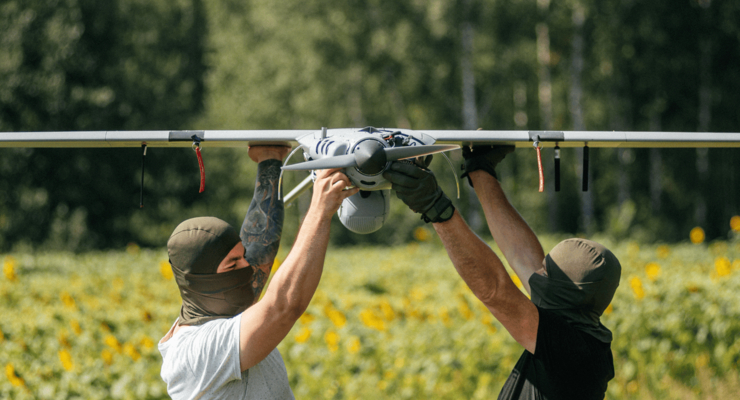
The Ukrainian Defense Tech market is demonstrating rapid growth, turning into one of the most promising industries for engineers, developers, and technical specialists. In 2025, Ukrainian defense startups attracted approximately $129 million in investments and grants, pushing the total volume of the defense technology market to at least $6.8 billion. Against the backdrop of this large-scale expansion, companies are actively growing their teams and offering salaries that, in certain segments, already exceed those in classic IT. This was reported by Dengi.ua with reference to an article by AIN.UA.
According to AIN.UA, back in 2023, Ukrainian Defense Tech startups were only able to attract about $5 million in investment. Since then, the sector has boomed, and roughly 1,500 companies have now joined the Brave1 defense cluster.
Data from the recruiting platform Lobby X reveals that Defense Tech currently accounts for about 55% of all its job placements. Since February 2024 alone, the platform has posted more than 1,000 unique job openings from defense firms.
This hiring surge is mirrored across other major platforms. Work.ua lists around 670 vacancies in the defense sector, while DOU features more than 1,000 offers for Defense Tech specialists.
Companies are looking not only for engineers and developers, but also for managers, production, logistics, and procurement specialists, recruiters, and skilled laborers. Embedded, hardware, and RF (radio frequency) engineers, alongside specialists in system and low-level development, remain the most highly sought after.
At the same time, industry insiders note that while a mass exodus from classic IT to Defense Tech has not yet occurred, interest is steadily climbing. Many specialists are drawn by the unique opportunity to work on technologies deployed in real combat conditions.
Compensation remains a primary point of attraction. According to Work.ua, the average salary in Defense Tech is about 43% higher than the market average. While the average salary of an IT specialist in Ukraine hovers around 27.5 thousand UAH, and a developer's average is about 40 thousand UAH, defense sector specialists can expect between 39 and 60 thousand UAH depending on their specialization.
In top-tier segments, the income is significantly higher. AIN.UA notes that Senior Embedded engineers receive anywhere from $4,000 to $5,500 and above, business development managers earn from $3,000, and laboratory and prototyping engineers make between $2,000 and $3,000.
Firms attribute these high salaries to an acute shortage of qualified talent, particularly in hardware, embedded development, and manufacturing. Beyond financial incentives, candidates want to work on innovations that directly impact the country’s defense capabilities and undergo immediate real-world testing.
The Ukrainian Defense Tech company Swarmer, which develops software for the autonomous coordination of drone swarms, notes that specialists come to the industry primarily for the purpose behind the work and the chance to build breakthrough solutions.
The company has already secured $15 million in investment and made history as the first Ukrainian Defense Tech firm to list its shares on the Nasdaq exchange.
Swarmer admits that finding integration engineers is particularly challenging, as these professionals must simultaneously master hardware, embedded development, network technologies, and the unique physics of drones.
Piranha Tech, which specializes in electronic warfare and drone countermeasures, also highlights intense competition for talent. They note that while they are fully prepared to invest in employee development, they prioritize candidates with a strong technical foundation and a high level of personal responsibility.
Another fast-growing player is TEKEVER Ukraine, the local division of the Portuguese-British drone manufacturer. Company director Kateryna Bezsudnaya told AIN.UA that RF engineers and electronics specialists are in exceptionally high demand.
"In our team, we jokingly call such people 'unicorns' because searching for them can take up to six months. In addition, finding electronics engineers is equally difficult," she noted.
According to Bezsudnaya, companies are counteracting the talent shortage by actively training employees, organizing international internships, professional certifications, and English language courses. The industry is also emerging as a promising career path for military veterans.
"I often find that many highly qualified specialists are hesitant to enter the field. For example, a veteran came to us for an interview who had worked at an automotive service station for more than five years before the full-scale invasion. He turned out to be an ideal fit for a technician position," Katerina Bezsudnaya told the publication.
Another distinct feature of the market is its geographical concentration. According to Work.ua, roughly 80% of Defense Tech openings are located in Kyiv and its surrounding region. Fully remote setups are rare, as most roles require direct, hands-on interaction with equipment and testing technologies.
To compensate, companies are increasingly offering hybrid schedules, business travel accommodations, and official mobilization deferments (booking) for eligible employees.
Industry representatives conclude that Defense Tech today offers more than just high salaries—it provides a rare opportunity to work within the most technologically advanced sector of the Ukrainian economy, which continues to evolve aggressively. As AIN.UA emphasizes, momentum among both specialists and investors shows no signs of slowing down.