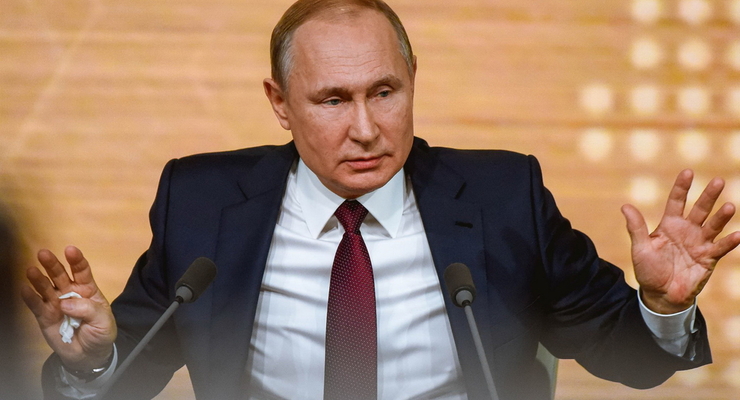
The International Criminal Court in The Hague clarified the rules regarding Putin’s arrest warrant. If the dictator attends peace talks, a member state of the Rome Statute is obligated to arrest him. An exception is possible only for negotiations held under the auspices of the UN — and even then, only after special consultations with the ICC. This was reported by Dengi.ua .
What the International Criminal Court in The Hague ruled regarding Putin
The ICC has published an important decision regarding Vladimir Putin. It concerns not the charges themselves, but the question of whether a person wanted by the ICC may participate in peace negotiations. What the court reiterated:
- the arrest warrant for Putin remains in force;
- it was issued on March 17, 2023;
- the basis is the charge of the unlawful deportation and transfer of Ukrainian children and other civilians;
- all states parties to the Rome Statute are obligated to execute the warrant;
- this does not depend on the fact that Putin is the current head of state.
Can a Country Invite Putin to Peace Talks Without Arresting Him
The court’s key conclusion concerns Putin’s participation in negotiations.
“A state cannot independently invite a person wanted by the ICC to peace talks and ignore its obligation to arrest him,” the ruling states.
In other words, holding negotiations with Putin’s participation does not exempt a country from its obligation to arrest him during his visit.
What Exception did the ICC make for Putin’s Arrest?
However, the judges left a narrow exception for cases where negotiations are organized under the auspices of the UN. When an exception is possible:
- peace talks are officially organized under the auspices of the UN;
- the state has obligations under the UN Charter;
- these obligations may conflict with obligations to the ICC;
- such a situation may be considered separately by the court through special consultations.
At the same time, the ICC explicitly stated that if the negotiations are organized not by the UN, but by:
- a single state;
- a group of states;
- any other intermediary;
then there are no grounds for refusing to execute the warrant. The obligation to arrest and surrender the wanted person to the court remains in full force.
How to Temporarily Suspend the Investigation Against Putin
The Court also emphasized that the only mechanism for temporarily suspending an investigation or prosecution is a special resolution of the UN Security Council. The conditions for such a resolution are:
- it must be adopted under Chapter VII of the UN Charter;
- the Rome Statute does not provide for any other mechanism.
What the ICC’s Decision Means for Future Peace Talks
The ICC has effectively stated that peace talks alone do not constitute grounds for ignoring an arrest warrant. Exceptions are possible only:
- in exceptional circumstances related to official UN mechanisms;
- even then, the decision must not be made by the state on its own;
- but within the framework of a procedure provided for by international law.
This decision could have serious implications for:
- any future negotiations to end the war;
- the states that could serve as a venue for such negotiations.