Since the start of the full-scale war, the Kyiv region’s warehouse real estate market has lost more than half of its pre-war space. As a result, retail chains and logistics companies are forced to change their supply chains, and the shortage of large warehouses could lead to higher rental rates, transportation costs, and, consequently, higher prices for goods. This was reported by LIGA.net, as cited by Dengi.ua.
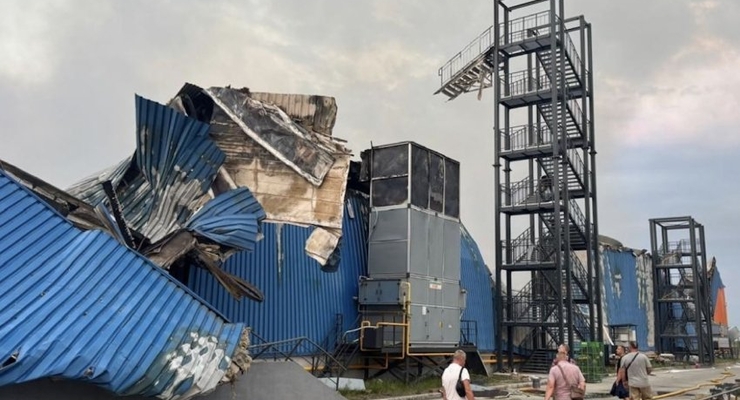
Before the full-scale invasion began, the total volume of warehouse real estate in the Kyiv region was approximately 2 million square meters. To date, more than 1 million square meters have already been destroyed, and following the latest Russian attacks, losses may exceed 1.2 million square meters.
Despite active construction of new facilities, the market has not yet been able to make up for the destruction. Throughout 2025 and the first half of 2026, developers delivered record volumes of new warehouse space. Last year alone, 216,000 square meters were built - the highest figure since 2008.
There Are Virtually no Large Warehouses Left
According to Yaroslav Gorbushko, director of the capital markets department at Expandia, there is almost no vacant space left in the Kyiv region. Currently, only a few individual units ranging from 500 to 1,000 square meters are available.
At the same time, warehouse units with an area of 10,000 square meters or more - which are essential for large retail chains and logistics operators - have virtually disappeared from the market.
Kyrylo Kravchenko, Managing Partner at A&K Real Estate Consulting, believes that the shortage of space could lead to a 7-10% increase in rental rates.
Experts note that following the demolition of large logistics complexes, companies will have to redistribute their inventory, rent several small warehouses instead of a single distribution center, and increase the number of shipments between warehouses and stores. Businesses will likely offset these additional costs in part by raising prices for customers.
Which Facilities Were Affected by Russian Attacks
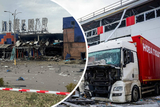
On the night of August 5, a Russian strike hit ten warehouse facilities in the Kyiv region with a total area of about 100,000 square meters. Companies are still assessing the full extent of the damage.
Among the most significant losses are:
- the Amtel logistics complex, with an area of about 100,000 square meters, destroyed on July 19 along with tenants’ goods, including those of WineTime and Goodwine;
- the RLC warehouse complex, with an area of 65,000 square meters, damaged as a result of the attack on August 5;
- the Raben Ukraine logistics complex, with an area of 65,000 square meters, the extent of damage to which is still being determined;
- the MTI Group’s main logistics hub - the Denka Logistics complex in the village of Chaiky, where approximately 20,000 square meters of warehouse space were destroyed. This facility handled deliveries for Intertop, Pandora, and the Samsung Experience Store chain.
Novus’s warehouse facilities also sustained serious damage. The company reported extensive destruction and a complete shutdown of the facility.
Rozetka lost its warehouse in Brovary, Kyiv Region, along with its inventory. The company’s co-founder, Vladyslav Chechotkin, estimated the damage at billions of hryvnias. According to him, the warehouse was completely destroyed and cannot be restored.
In Kyiv, a Russian attack destroyed the “Nova Poshta” sorting center. Three people were killed in the strike, and eight others were injured. A few days earlier, the company had lost two other facilities.
Fires also broke out at two distribution centers belonging to Fozzy Group, which operates the “Silpo” chain. The company reported the deaths of six employees.
In addition, a warehouse belonging to a Bosch logistics partner - where products for various business lines were stored - was destroyed. According to preliminary estimates, all goods in the warehouse were destroyed. The company, together with its partner, continues to assess the damage.
During the same attack, two logistics facilities belonging to the “Epicenter” chain were damaged; the extent of the damage is still being determined.
A logistics complex housing PUMA brand products was also completely destroyed. The company has warned of possible supply disruptions and a temporary reduction in product availability on the Ukrainian market.
The central warehouse of Liqui Moly Ukraine, the official supplier of motor oils, lubricants, and automotive chemicals, was completely destroyed by fire. The company stated that it is already working to restore supplies, redistribute warehouse stocks, and establish new logistics routes, emphasizing that it does not intend to cease operations.