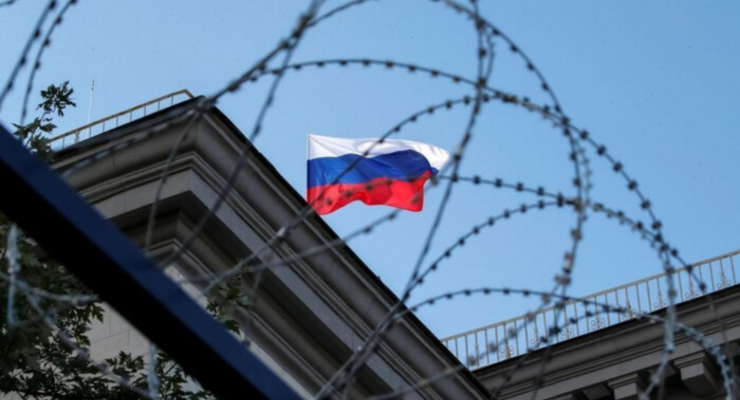
The EU Council has adopted its 21st package of restrictive measures against Russia in response to its war of aggression against Ukraine. The package includes the largest list of targeted sanctions in the past four years - 218 entries, comprising 48 individuals and 170 entities.
This was reported by Dengi.ua, citing a press release by the EU Council.
What Restrictions Have Been Imposed on the Financial Sector and Cryptocurrencies?
The EU has frozen assets and banned the provision of funds to 94 banks, extended the transaction ban to 33 additional Russian financial institutions, as well as to 14 crypto platforms from Georgia, Panama, the UAE, the Marshall Islands, Kyrgyzstan, and Belarus.
For the first time, the EU has introduced the ability to impose a complete ban on crypto-related services from third countries - this new tool will allow the EU to prohibit transactions between an EU operator and any crypto provider used by Russia.
How the EU Is Limiting Russia’s Energy Revenues
The package suspends the automatic adjustment of the oil price cap until July 15, 2027, to limit Russia’s revenue from oil sales. Forty-one new vessels, along with eight legal entities and one individual involved in this ecosystem, have been added to the sanctions list targeting the shadow fleet.
In the oil sector, sanctions have targeted 18 legal entities and 1 individual, including three oil refineries in Russia and a major Belarusian refinery. The EU has also extended the transaction ban to two Russian ports and four airports.
How the Sanctions Will Affect the Military-Industrial Complex
The package adds 56 individuals linked to Russia’s military-industrial complex - 37 of whom are directly involved in the production of long-range drones. Another 51 companies have been added to the list subject to stricter export restrictions on dual-use goods, specifically from China, India, Kazakhstan, Kyrgyzstan, Turkey, and the UAE.
What Else Does the New Sanctions Package Entail?
The package lays the groundwork for a visa ban on combatants of the Russian armed forces, expands the ban on exports of goods for the military-industrial complex (nickel, beryllium, drone components), and imposes restrictions on the import of goods that generate more than €60 million in revenue for Russia.
The EU has also added eight individuals to the list for spreading military propaganda, as well as a major general implicated in the torture and execution of Ukrainian prisoners of war. Similar measures have been imposed against Belarus.
The European Council reaffirmed its determination to continue increasing pressure on Russia and supports diplomatic efforts to end the war.