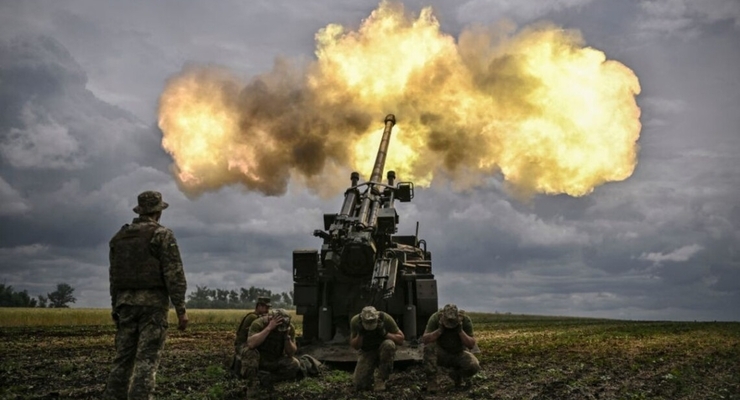
The Ukrainian leadership admits the possibility of ending the active phase of the war by November 2026, but emphasizes that such a scenario depends on the situation on the front, the position of the U.S., and Russia's readiness to abandonsome of its military goals. RBC-Ukraine writes about this with reference to sources in the authorities and military leadership here, as well as Dengi.ua.
According to the newspapers' interlocutors, for the first time in a long time, the dynamics of hostilities have started to develop in Ukraine's favor. At the same time, Russia continues its offensive actions, but it achieves increasingly limited results at the cost of significant losses.
Why the Russian Offensive is Losing Momentum
Sources note that the pace of the Russian troop advance has slowed to its lowest level in over a year. Despite maintaining pressure on several parts of the front, the Russian army has so far failed to achieve serious operational success.
Moscow's main goal remains the full capture of the Donetsk region, including Kostiantynivka, Sloviansk, and Kramatorsk. However, the deadlines for the fulfillment of these objectives have been repeatedly postponed, according to sources.
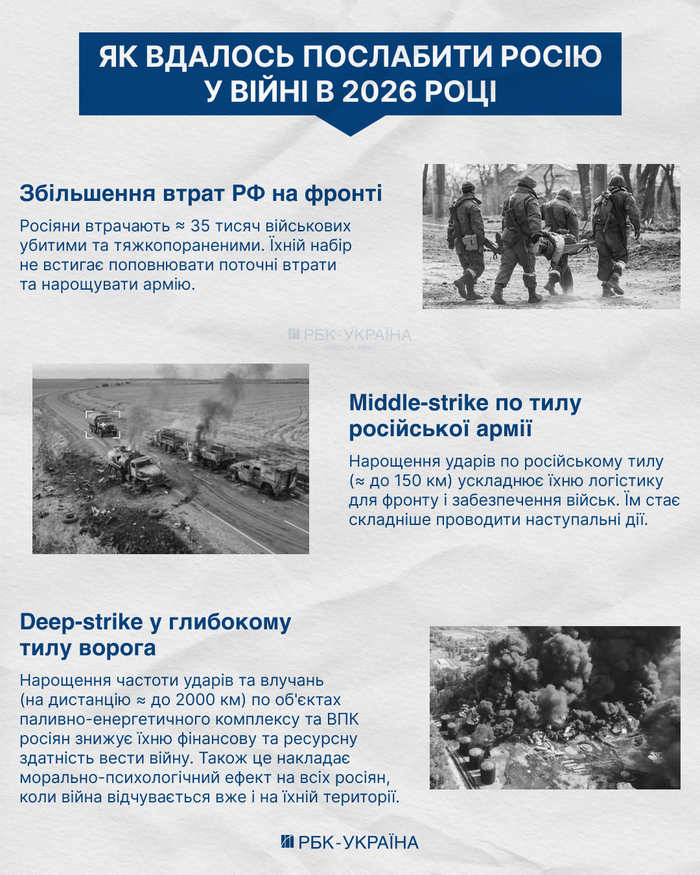
One of the reasons for the slowdown of the offensive is said to be the high losses of the Russian army. The Ukrainian side estimates that Russia loses about 35,000 servicemen killed and seriously wounded every month, while the recruitment of contract soldiers only partially compensates for these losses.
In addition, the Ukrainian military has significantly increased the use of drones, which has made it possible to destroy enemy logistics, warehouses, command posts, and supply routes more effectively.
How Drones are Changing the Situation on the Battlefield
In recent months, Ukraine has significantly increased the number of strikes on the operational rear of Russian troops. Drones are hitting ammunition depots, fuel bases, airfields, and transport routes dozens of kilometers from the front line.
According to the sources, the destruction of logistical facilities directly affects the Russian troops' ability to conduct large-scale assault operations. At the same time, Ukraine continues to strike facilities on Russian territory.
The priorities include oil refineries, facilities of the fuel and energy complex, and enterprises of the military-industrial complex.
This strategy is aimed at reducing Russia's revenues from energy exports and limiting the defense industry's capacity to produce weapons.
Why the Kremlin is Stepping Up Threats to Kyiv
Against the backdrop of strikes on the Russian rear, Moscow has announced its intention to carry out more systematic attacks on the Ukrainian capital. According to sources, such threats may pursue several goals at once.
Among them are a response to Ukrainian attacks on facilities in Russia, an attempt to weaken Ukraine's defense potential, as well as pressure on society and the country's leadership in order to induce Kyiv to negotiate on Russian terms.
At the same time, the newspapers' interlocutors believe that Russia retains the ability to organize massive missile and drone attacks approximately every 5 to 10 days.
Whether it is Possible to End the Hot Phase of the War
Ukraine's political circles believe that there is a chance for a truce or an end to the most intense hostilities as early as this year.
One of the key factors is the U.S. congressional elections to be held in the fall. According to the sources, Washington may intensify efforts to settle the conflict before the election campaign peaks. In addition, certain hopes are pinned on the possible strengthening of diplomatic activity between the U.S. and Europe after the resolution of other foreign policy crises.
President Volodymyr Zelenskyy has also previously stated that there are prerequisites for ending the hot phase of the war before November, provided the current dynamics on the front and the support of international partners can be maintained.
What Can Prevent Peace
At the same time, the Ukrainian authorities emphasize that it is premature to talk about an early end to the war.
Russia has not yet demonstrated a readiness to completely abandon its strategic goals and may try to change the situation through new mobilization efforts or an escalation of hostilities.
The risks also include possible attempts by the Kremlin to use future negotiations to promote political demands that would be unacceptable to Ukraine. According to RBC-Ukraine's interlocutors, the most realistic option for the coming months is to reach agreements on the cessation of active hostilities or a freezing of the conflict along the current front line, provided Ukraine receives reliable security guarantees.
At the same time, the final development of events will depend on the situation on the battlefield, the state of the Russian economy, international pressure on Moscow, and the effectiveness of the diplomatic efforts of Western partners.