According to the World Bank, one in five Ukrainian companies has suffered losses due to Russian attacks. According to the international assessment of Ukraine's needs for recovery and reconstruction (RDNA4), as of June 2025, industrial and commercial companies have suffered losses amounting to more than $17.5 billion. Under such conditions, it is becoming increasingly difficult to open and run your own business in Ukraine. Dengi.ua found out whether the domestic business manages to compensate for the losses caused by Russian attacks, who and what helps entrepreneurs to withstand the full-scale war.
"Water Systems" on fire
Elena Gusarova, director of LLC "Group of Companies Water Systems", arrived on the territory of the enterprise at three o'clock in the morning on July 4, 2025, when Kiev was still under large-scale Russian shelling. All neighboring enterprises - manufacturers of bottles, stickers for dairy products, sellers of filters - were burning in flames, and the company's warehouse was burning with them.

Law enforcement agencies and the State Emergency Situations Service recorded the fact of a terrorist attack by the Russian Federation and the damage: about 2,000 boilers, warehouse and office equipment, documentation, etc. The worst thing, according to Olena, was that some of the products that were under credit obligations in the FUIB bank for UAH 8 million were burnt.
In total, Water Systems suffered damage of more than UAH 13 million, of which UAH 6 million were credit liabilities. At the time of the Russian attack, the company had paid only UAH 2 million to the bank. However, despite the obvious force majeure and the company's financial discipline in repaying the loans, FUIB did not comply and refused to restructure the debt.
According to Gusarova, the bank decided to cover its potential losses at the expense of the pledged property.
The government did not behave in the best way either, as it did not even assess the losses. Water Systems collected evidence for a lawsuit against the Russian Federation with the help of lawyers.
- As we have learned, the state has neither a mechanism for reimbursement of losses inflicted by the RF to business, nor appropriate funds. Such a mechanism exists only for citizens whose property has suffered from Russian attacks," Elena Gusarova says. In her opinion, the government should have at least created a clear and understandable algorithm of actions for companies: where to apply, what documents to collect to confirm the involvement of the Russian Federation in a particular attack.
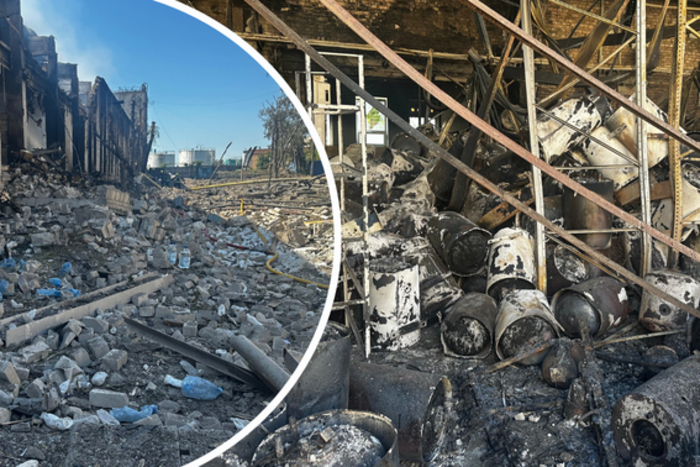
The prospect of whether compensation for business losses after the war is envisioned at all remains unclear. Also unresolved, according to the director of Water Systems, is the issue of accounting for Russian attacks as force majeure in contractual relations with banking institutions.
- It turns out that business today owes the state, and the state owes business nothing," summarizes Gusarova.
"Position" of business
"Water Systems is just one of thousands of companies that have suffered losses from the RF attacks. We were surprised, but quite a few businesses refused to tell Dengi.ua , how they cope with the consequences of enemy strikes. Perhaps it is due to the confidentiality of business information, perhaps - with fear to speak openly about the actual inactivity of the state. However, a few daredevils dared to talk about this topic.

EXSO group company specializes in sewing corporate clothing and making accessories, in particular printing inscriptions and applying logos. On the night of June 10, 2025, as a result of massive Russian shelling of Kiev, the company's production was completely destroyed along with finished products. As the director of EXSO group Alexey Zorin notes, it was not difficult to estimate the losses, because in fact everything on the company's balance sheet was destroyed: from equipment and furniture to the warehouse of clothes and materials. Over the past three months, the state has not conducted an official assessment of the losses and has not provided a single hryvnia of compensation.
- We hope to buy new equipment at the expense of the grant, but what we borrowed from suppliers and put on the balance sheet cannot be compensated," Zorin points out.
According to him, the bank did not agree with EXSO group on restructuring of the loan, which was used to purchase the destroyed property, and the insurance company, referring to the terms of the contract, refused to reimburse the losses.
Despite this, the company continues to work: it moved to a new location, to an area where there were no hits, production was distributed over several locations, and new equipment was insured.
- Now we are catching up everything and by the end of the year we hope to reach the level before the May expansion of our business, - says the director of EXSO group.
Large businesses have losses of a completely different scale. The company "Epicenter" tells Dengi.ua that since the beginning of the full-scale invasion 8 shopping centers with a total area of 136,600 square meters were completely destroyed, two were lost due to damage and proximity to the war zone, a number of shopping centers are located in the occupied territories. In addition, most recently, on September 16, 2025, the Russian Federation launched a serious drone strike on the company's logistics center in the Kiev region, causing significant losses.
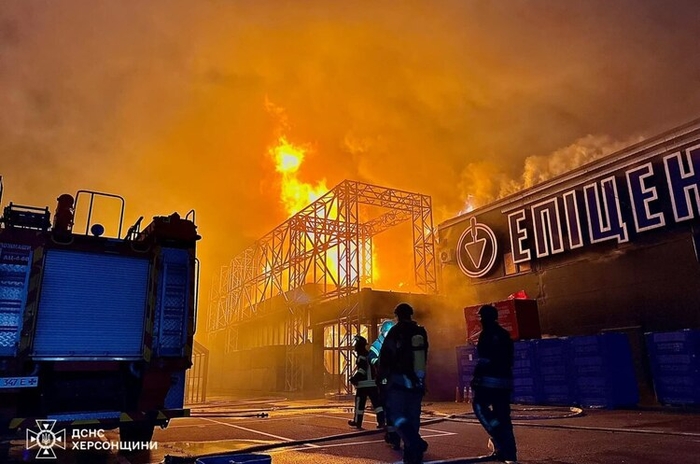
According to independent experts, Epicenter's total losses due to the full-scale war are currently estimated at more than $1 billion. The estimate includes both real losses - destroyed or damaged shopping centers, lost goods, equipment and other assets - and lost profits due to the inability to carry out business activities.
- Our company has not received compensation for losses from the government. However, we understand all the difficulties and continue to support the country during this difficult period," Epicenter said. The company also emphasizes that to date, state agencies do not assess losses for legal entities, so it can be confirmed only in court.
At the same time, Epicenter reports that the company has not had any significant misunderstandings with banks or insurance institutions because of the damage, although there are certain difficulties with lending, such as limited limits and increased requirements for collateral.
State'sposition
All affected enterprises interviewed Dengi.ua claim that the state did not assess the losses they received. When asked why, the State Property Fund answers us that the determination and assessment of losses of companies are regulated by the Procedure adopted by the Cabinet of Ministers of Ukraine from 20.03.2022, as well as the Methodology approved on 18.10.2022 by the Ministry of Economy and the State Property Fund.
It is stated therein that losses are calculated by means of standardized, independent, analytical assessment or according to the results of forensic examination.

Standardized assessment is carried out by state or local authorities. In this case, they use certain initial data and follow the appropriate methodology, but can refuse the assessment, if there is no existing normative act defining the procedure for its conduct.
In addition, the ministry emphasizes that it is the assessment of property and losses, not the procedure for their reimbursement.
In its turn, the Ministry of Economy does not explain Dengi.ua , under what conditions state bodies can refuse to assess losses. However, they assure that they pay special attention to the introduction of mechanisms for compensating companies that suffered losses because of Russia.
As an example, the agency cites the "Grants for Processing Enterprises" program, updated on July 7, 2025, which provides funds to businesses for the renewal of fixed assets of production. However, the terms of the program determine restrictions in the amount of payments, which cannot exceed UAH 16 million, as well as the actual amount of losses.

It should also be understood that we are talking only about processing enterprises and funds for production facilities. But there is not a word about commodity stocks that could have been destroyed during the aggressor's attacks.
The Ministry does not name any other such grants, but reminds about the Register of Losses, created in 2023, which records applications of companies and citizens for compensation for losses from the war. At the same time, the ministry does not explain how exactly businesses can use the Register.
What lawyers say
Ilya Shevchenko, head of the practice of fixing and compensation for war losses, co-managing partner of the ARMADA law firm, shares with Dengi.ua details of legal practice and problems faced by entrepreneurs. According to him, at the moment there is no simple accessible state program for companies to fix and compensate for losses caused by the Russian Federation. The lawyer names three key formats that businesses can take advantage of today, but they all have nuances.
The first format is international investment arbitration. This mechanism has significant advantages - established practice since the time of disputes over the loss of assets during the occupation of Crimea, the possibility of enforcing decisions in more than 150 countries. However, the average cost of the process is about $2 million and the duration is ± 5 years. The high price of this mechanism makes it an attractive route for large companies, but makes it impossible for small and medium-sized businesses.
The second format is an international compensation mechanism, which is just being established at the level of the Council of Europe and will consist of three links:
- The Register of Losses - a large "database" where citizens, businesses and the state will be able to submit claims for compensation for losses incurred. Now only individuals can apply there. It is assumed that in the near future business will also be able to do this;
- a special international commission - will consider applications submitted to the Register. It has not been established yet, but is expected to start its work in 2026;
- a fund - will disburse funds as decided by the commission. It does not exist yet either, but the European Parliament and the Council of Europe say that they are working on a regulatory framework that will allow the income from the "frozen" funds of the Russian Federation to be used to fill the fund. The first steps in this direction are already being taken.
The third format is litigation in Ukraine, which is currently the main avenue for business. One of the main problems of which is insufficient informing of enterprises about it by the state. In addition, the process itself is quite complex, as Ukrainian legislation is not adapted to the consideration of disputes on losses caused by military aggression. Judicial practice on some specific issues is not yet permanent and is just being formed, in particular, with regard to the status of property lost in the occupied territories and other nuances.

Shevchenko notes that after the judgment is issued, the traditional way - to obtain an order and submit it to the executive service or a private executor - does not work. After all, Ukraine has opened consolidated enforcement proceedings against the Russian Federation for compensation at the expense of its assets, but they are not executed. All because there is actually nothing to collect on the territory of Ukraine. Therefore, in order to execute decisions against the Russian Federation, it is necessary to search for its assets abroad for the purpose of further recovery, which, unfortunately, makes these projects more expensive.
- At the same time, from the business side, the demand for lawsuits in Ukraine against the Russian Federation is constantly growing. In 2022 there were about 20 court decisions on such disputes, in 2023 - about 150, now there are already more than half a thousand, - emphasizes the lawyer.
The position of banks
The situation with banks remains contradictory: while Epicenter, which suffered large-scale losses due to Russian attacks, had no problems with banking institutions, other businesses faced them.
Dengi.ua asked FUIB to explain why the bank refused to restructure the debt of Water Systems. In response, we are assured that given the exceptional circumstances the company found itself in, it was offered a certain format of debt repayment. FUIB decides not to go into details, citing banking secrecy.

Privatbank, which is the largest lender of business loans in Ukraine, for almost a month assured Dengi.ua that it was preparing statistics on our question about the practice of debt restructuring of the affected companies. However, in the end, we did not receive a substantive answer. The only thing we are assured of is that the bank is developing programs to defer payments for the affected businesses on individual terms.
The second state-owned bank, Oschadbank, answers that in situations with losses from the attacks of the Russian Federation they meet the borrowers' needs by restructuring the debt. To determine the terms of such an operation, they analyze the level of damage, its impact on the ability of the business to service the loan, as well as the readiness of companies for a constructive dialogue.
Position of insurance companies
Insurance companies, unlike banks, comment more substantially on the problems of businesses affected by Russian attacks. Insurers say that business can protect property from military risks, but with certain limitations and nuances.
According to Yuri Bondar, director of corporate sales development department of ARX insurance company, their programs cover production lines, warehouses, cargoes, agricultural machinery. Insurance terms depend on the location of assets, their specifics and protection measures. ARX conducts its own assessment and then offers solutions to clients.
- The company has already insured more than 300 large and medium-sized business objects against war risks. Only in the first half of 2025, various clients have been paid more than UAH 45 mln of compensations on this parameter, - Bondar notes.
At the same time IC INGO offers to protect from missile and drone attacks buildings, production lines, finished products, equipment of offices, warehouses, logistics sites, as well as cargoes during transportation or temporary storage. Sergey Krivosheev, the company's Corporate Business Director, notes that in addition, it is possible to reimburse the costs of cleaning the territory, restoring documentation, dismantling and removal of destroyed property. Business interruption is not included in the basic package, but can be considered separately.

Before insuring a business object, INGO specialists study its characteristics, location, risk profile, proximity to critical infrastructure and available statistics of air attacks. If necessary, the company engages independent appraisers, especially when it comes to large industrial or commercial facilities. INGO now insures hundreds of businesses against military risks. And in 2024, companies in general were paid UAH 1.15 billion in compensation for various losses.
- In Kiev, we paid out more than UAH 20 million for damage to a large office complex after a missile attack. In Dnipro, the production and warehouse facility of Biosphere Group was destroyed - the company received compensation in the amount of UAH 10 million, which was equal to the maximum limit of the contract," emphasizes Krivosheev.
Position of FRU, EBA and Business Ombudsman
Ruslan Ilyichev, Director General of the Federation of Employers of Ukraine (FERU), tells Dengi.ua that about 300 large companies-members of FERU suffered from the aggression of the Russian Federation. Among them there are partially destroyed, completely destroyed, as well as those that remained in the occupied territories. Each of them had or has a problem with recording actual losses.
- Unfortunately, to date there is no unified state program for compensation of losses of businesses that suffered as a result of Russian Federation attacks. The state has created a certain mechanism for their fixation, but neither Ukraine nor the international community has decided on a system for their compensation," the CEO notes.
According to Ilyichev, the FRU has repeatedly emphasized to the authorities the need to simplify crediting conditions for the affected business, as the requirements of banks in general remained at the level of 2021. Now the Federation is preparing an appropriate package of proposals to address this issue.
The FRU estimates that only 15% of companies stop working after the RF attacks. The remaining 85% try to recover with their own money or with the help of grants that processing companies can get.
The CEO also notes that since 2023 the FRU has initiated a pilot project - "Industrial Ramstein". It is about Ukraine's appeal to international partners and donors to provide part of the support in the form of equipment and machine tools produced at the enterprises of the countries that help Ukraine.
The first preparatory version of the project, according to Ilyichev, is already at the testing stage. In particular, the established commissions under civil-military administrations record the inclusion of destroyed equipment in a certain register. Further in the future, the affected companies will choose the necessary equipment from manufacturers of partner countries, the future foreign fund will finance it, and the machines will be delivered to Ukraine.
- We have digitized almost 530 units of destroyed equipment, and new ones are added every day. The next step is for the government to sign the relevant agreements that will regulate the project and determine its financing," summarizes Ruslan Ilyichev.
The European Business Association (EBA) notes that more than half of the companies surveyed by it (54%) have suffered losses from Russian aggression. Among them only 42% tried to solve the problems of compensation for losses: 25% applied to law enforcement agencies, 11% had such plans, 3% sought help in Ukrainian courts, 3% - in international judicial institutions.
On behalf of the affected companies, the EBA has repeatedly appealed to the Verkhovna Rada with proposals to create a system of state support for companies affected by Russian attacks. In particular, the Association proposed to simplify the procedures of notification of state bodies about property damage and to introduce a mechanism of compensation for losses. In addition, it advised to develop a system of war risk insurance and to extend the period of document recovery with the possibility of exemption from liability for businesses whose primary records were completely destroyed.
The EBA separately emphasized the need to provide tax benefits and reduce the Unified Social Contribution (USV) for businesses affected by Russian shelling.
The Council of the Business Ombudsman responds to a request from Dengi.ua that so far they have not received any complaints from businesses about the impossibility to compensate for the losses inflicted by the Russian Federation. At the same time, they said that an information brochure for businesses with tips on how to fix losses is currently at the approval stage. Here, as they say, no comments.
Abandoned at will
So, a rather gloomy picture emerges under the title "Survival of Ukrainian business during a full-scale war with the Russian Federation". In general, the situation can be described as "it is up to the drowning to save the drowning". The state has developed a couple of methodologies and procedures for assessing losses, and in fact, it has withdrawn itself from solving the problems of companies affected by Russian attacks.
Yes, there is a program "Grants for Processing Enterprises," but it appeared only in the middle of the fourth year of the war and has limited application. How, for example, can Epicenter, which suffered more than $1 billion in losses but is not a processing company, take advantage of this program? Or a small business that has had its warehouses of goods destroyed?
Arguments of inaction of the state in the style of "not for the time being", "all the money goes to the war", "there is no money in the budget" - do not stand up to any criticism. If we calculate how much money was spent on all sorts of dubious initiatives, "paving stones", unnecessary/untimely repairs, etc. during the four years of the war, we can get the amount of at least 100 billion hryvnias. And this is without taking into account the hundreds of billions that are circulating in the shadow economy under a reliable "roof". What is only worth smuggling at customs and counterfeit production of vodka and cigarettes!
Thus, the matter, as always, is the lack of political will and the general attitude of the authorities to business as a "cash cow".
It turns out that in this situation Ukrainian entrepreneurs can only rely on their own forces and the Defense Forces, which protect the Ukrainian sky from missile and drone attacks.